
Last updated September 25, 2026
Free written scope consultation - allowances, timeline, and change-order rules on paper before a single trade is scheduled






 Before
 After
After Before
 After
After Before
 After
AfterConstruction Warning Signs: A Cupertino Homeowner’s Reference Guide
A request for more than 10% down before work begins violates California Business and Professions Code §7159 - yet it is the single most common early indicator of contractor insolvency or fraud in residential projects. In Cupertino, where median home values exceed $2.5 million and even modest kitchen renovations start at $75,000, the financial exposure is severe. This guide and our more guides & resources catalog the specific language, contract structures, and job-site behaviors that signal a project is headed for cost overruns, disputes, or contractor failure - and what a homeowner can do before the situation requires an attorney.
Quick Answer
The warning signs of a troubled construction project appear in four stages: bid documents that lack line-item detail or undercut field pricing by 20% or more; contracts with vague scope language, missing change order clauses, or front-loaded payment schedules; job-site behavior including crew turnover and materials that don’t match specifications; and documentation failures such as verbal change orders with no signed amendment. A Cupertino homeowner who spots these signs early, responds with written communication, and understands CSLB complaint procedures can typically protect their position without litigation, though many start with our How to Hire a Construction Contractor in Cupertino: A Step-by-Step Guide to avoid these issues entirely.
Table of Contents
- Bid Red Flags: What the Numbers Actually Tell You
- Contract Red Flags: The Language That Predicts Disputes
- Payment Schedules and the 10% Rule
- Job-Site Behavioral Signals
- Documentation Failures That Precede Disputes
- Your Response Sequence: Written Communication to CSLB
- Mechanics Lien Awareness in Santa Clara County
- Common Mistakes to Avoid
 Before
 After
AfterBid Red Flags: What the Numbers Actually Tell You
A bid is a forecast, and like any forecast, its reliability depends on the specificity of its inputs. The bids that generate the most disputes in Cupertino share a common structure: a single lump-sum number with minimal line-item breakdown, no allowance for permit fees, and no identification of who performs which trade.
The 20% Gap Rule
When a bid arrives 20% or more below the field average for comparable scope, the gap signals one of three conditions: the contractor has underestimated material quantities or labor hours; the contractor plans to recover margin through change orders; or the contractor is financially stressed and bidding at or below cost to maintain cash flow. None of these conditions benefits the homeowner.
In our experience reviewing competitor estimates through our Rowan Construction Group Cupertino home Free Second Opinion service, the most common omission in low bids is the full permit fee schedule. Cupertino’s building permit fees for a kitchen remodel can run $3,500-$6,000 depending on valuation, and a bid that lists “permits - TBD” or omits them entirely is underreporting project cost by that amount. The homeowner discovers the gap only after signing.
Missing Line Items to Verify
- Permit fees, including plan-check and inspection fees for Cupertino’s building department
- Demolition and disposal, including debris box rental and disposal weight limits
- Subcontractor identification - electrical, plumbing, and HVAC must be performed by licensed specialists
- Material brand and model numbers, not generic descriptions like “granite countertops” or “premium shingles”
- Allowances with dollar values attached, not open-ended placeholders
- Waste factor and contingency percentages
A bid from Kitchen Remodeling in Cupertino should specify whether cabinets are KraftMaid or Wellborn, whether countertops are Cambria or Caesarstone, and what grade of plywood substrate supports the tile. Generic language protects the contractor’s margin, not the homeowner’s specification.
Unlisted Subcontractors
California law requires prime contractors to disclose subcontractors performing work exceeding $500 in value. A bid that names no subcontractors, or lists only the prime’s own license number, may indicate the contractor intends to use unlicensed labor or perform trades outside their license classification. Verify every license at cslb.ca.gov before signing.
Contract Red Flags: The Language That Predicts Disputes
The contract is where enforceable promises live. The disputes we review through our Free Second Opinion service - which complements our DIY vs Professional Construction: The Cupertino Homeowner’s Decision Guide - almost always trace to contract language that was vague at execution and became contentious at payment time.
Vague Scope Language
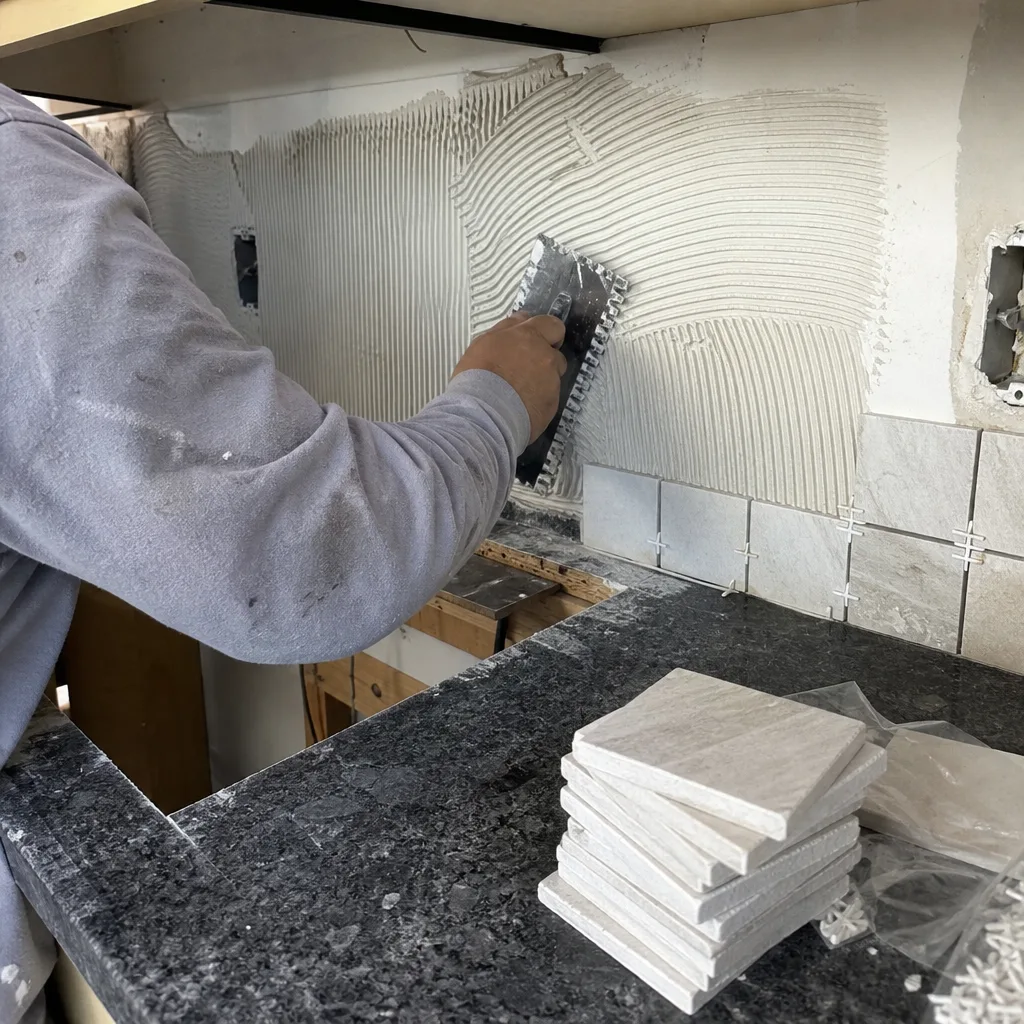
Phrases like “repair as needed,” “replace damaged substrate,” or “finish to industry standard” create unbounded obligations for the homeowner and escape hatches for the contractor. A proper scope specifies square footage, material grades, fastening patterns, and finish levels. “Install backsplash” is inadequate; “Install 45 square feet of 3×6 subway tile with Mapei Ultraflex LFT thinset, 1/16″ grout joints, Mapei Flexcolor CQ grout in Warm Gray” is enforceable.
For Bathroom Remodeling in Cupertino, the contract should specify waterproofing membrane brand and application method (liquid-applied vs. sheet membrane, flood-test duration), exhaust fan CFM rating, and whether tile extends to ceiling or stops at 8 feet. Each specification is a decision point that prevents dispute.
The Missing Change Order Clause
A contract without a written change order procedure - signed by both parties, with price and scope documented before work proceeds - is a contract designed for dispute. Under The Haven Standard, Clause 1 requires a written price before any work starts; Clause 3 requires a signed change order before any deviation from that written scope. This is the administrative discipline that has kept Rowan’s projects within a few percent of the agreed cost across 4,000-plus jobs since 2007.
A contract that permits “verbal approvals” or “time and materials for extras” removes the homeowner’s ability to control cost. The contractor performs work, then presents an invoice. The homeowner’s leverage - the ability to decline or negotiate - has already expired.
Allowances Without Dollar Values
Allowances are placeholders for selections not yet made. A contract that lists “tile allowance” with no dollar figure, or “lighting allowance - TBD,” creates a budget with no bottom. The homeowner selects a $4,000 chandelier; the contractor priced $400. The $3,600 difference becomes a dispute or a change order.
Proper allowance language specifies the dollar amount, the vendor or vendor tier, and the procedure for overage or credit. “Plumbing fixtures: $2,500 allowance at Ferguson Enterprises; homeowner selections above allowance paid by change order; credits below allowance applied to final invoice.”
Payment Schedules and the 10% Rule
California Business and Professions Code §7159 limits down payments on home improvement contracts to 10% of the contract price or $1,000, whichever is less. This is not a suggestion; it is a statutory ceiling with specific exceptions (fire or flood restoration, certain custom materials). A contractor who requests more is either uninformed of basic law or deliberately violating it.
Why the 10% Rule Exists
The statute protects homeowners from contractor insolvency. A contractor with substantial cash reserves does not need 30% or 50% upfront to mobilize. A contractor who does need that cash is often using today’s deposit to finish yesterday’s job - a Ponzi-like cash flow that collapses when new work slows.
In Cupertino’s active market, we’ve seen contractors request 25% down “for permit expediting” or 50% “for custom cabinet ordering.” Both requests violate §7159. Custom materials may be ordered with a separate materials deposit agreement, but the standard down payment remains capped.
Progress Payment Structures That Protect Both Parties
- 10% at contract execution (statutory maximum)
- 25% at substantial material delivery and permit approval
- 50% at rough inspection completion (framing, electrical, plumbing, mechanical)
- 15% at final inspection and substantial completion
A schedule that front-loads payments - 50% down, 40% at start, 10% at finish - transfers all risk to the homeowner. If the contractor abandons the job after collecting 90%, the homeowner has minimal leverage and maximum loss.
Under The Haven Standard, our payment schedule is printed in every contract, tied to inspection milestones, and never front-loaded. The 365-Day Done Right Promise applies regardless of payment timing - the guarantee is printed on every page and backed by a terms page, not an asterisk.
Job-Site Behavioral Signals
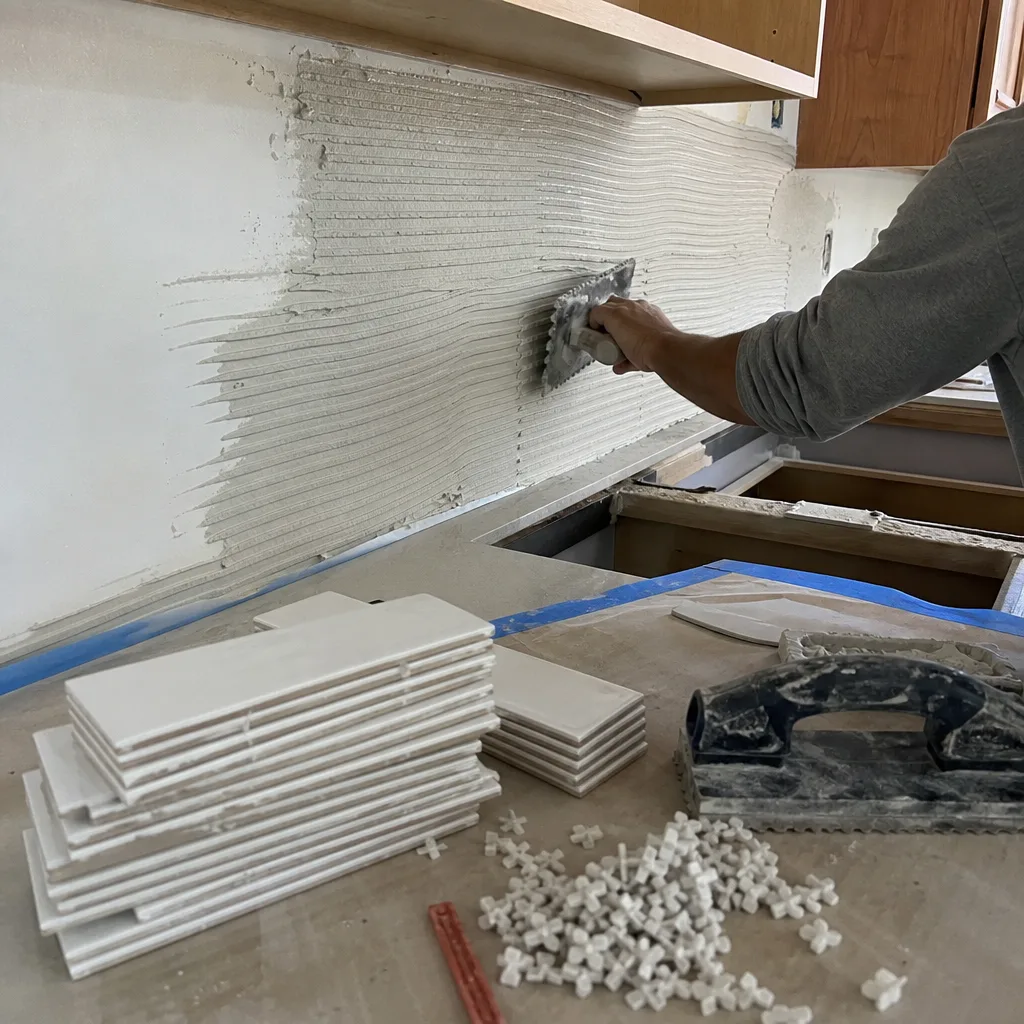
Documentation and contracts matter, but the job site reveals what paper conceals. A homeowner who visits weekly - or receives the documented photo record that Rowan includes as standard on every visit - can spot behavioral warning signs before they become structural failures, a practice we detail in our Kitchen Remodeling Maintenance Checklist for Cupertino Homeowners.
Crew Turnover Mid-Project
A project that begins with one lead carpenter and transitions through three different foremen by week six indicates management failure. The original estimator may have left the company; the project may have been sold to a subcontractor at lower margin; or the crew may be quitting due to unpaid wages. Each explanation predicts delay and quality degradation.
In Cupertino’s competitive labor market, skilled tradespeople have options. A contractor who cannot retain crew is typically a contractor with cash flow problems. Ask directly: “Is this the same team that will be here throughout?” Document the answer.
Materials That Don’t Match the Spec Sheet
The shingles delivered are GAF Timberline HDZ, but the contract specified Owens Corning Duration. The paver color is “Slate” but the approved sample was “Bluestone.” These substitutions are rarely innocent. The contractor may have a volume rebate arrangement with a different supplier, or may be clearing inventory from a canceled job.
Material substitution without written approval violates the contract and may void manufacturer warranties. Belgard pavers installed with unapproved base preparation void the Belgard warranty; Cambria countertops cut by unlicensed fabricators void the Cambria 10-year limited warranty. The homeowner bears the loss.
Our crews carry the spec sheet on-site; every delivery is photographed against that sheet; and the customer receives those photos as part of the documented record. This is not an upgrade - it is standard practice under The Haven Standard.
Subcontractors Who Don’t Know the Project Scope
A plumber who asks “what are we doing here?” or an electrician who hasn’t seen the lighting plan has not been properly briefed. The prime contractor’s obligation includes coordination and communication; a subcontractor working from verbal instruction or outdated drawings will install wrong, then dispute whose error it was.
For Roofing in Cupertino, this signal is particularly costly. A roofing crew that doesn’t know whether the contract includes deck replacement or just shingle overlay may strip to bare wood, discover extensive rot, and present a $15,000 change order - or install over damaged substrate and void the GAF or Owens Corning warranty. Either outcome damages the homeowner.
Documentation Failures That Precede Disputes
The projects that end in litigation share a common feature: the documentary record stops shortly after the contract is signed. No daily logs, no photos, no signed change orders, no inspection records. The homeowner’s position in any dispute depends entirely on what can be proven.
The Absence of Signed Change Orders
Every addition, deletion, or substitution must be documented in a signed change order before the work proceeds. Verbal approvals, text message confirmations, and “we’ll figure it out at the end” arrangements are unenforceable and create the conditions for dispute.
Under The Haven Standard, no work proceeds on a change until the change order is signed. This is the administrative discipline Haven acquired Rowan for, and the reason projects finish within a few percent of the number the customer agreed to. A contractor who cannot produce a signed change order for every deviation from contract scope is a contractor who has not implemented basic project controls.
No Daily Logs or Progress Photos
A professional contractor documents condition before work, progress during work, and completion after work. This documentation protects both parties: the contractor against claims of damage to existing conditions, the homeowner against claims that work was performed that was not.
Our standard deliverable includes a documented photo record on every visit - included, not optional. The customer leaves with evidence of what was found and what was done. A contractor who resists photography, or who promises “I’ll send photos later” and doesn’t, is either disorganized or concealing conditions.
Invoices That Don’t Match the Schedule of Values
The schedule of values allocates the contract price to work phases. An invoice that requests payment for “65% complete” when rough inspection hasn’t occurred, or that includes charges for work not in the contract, is a payment demand without basis. Match every invoice to the schedule and to observable progress before paying.
Your Response Sequence: Written Communication to CSLB
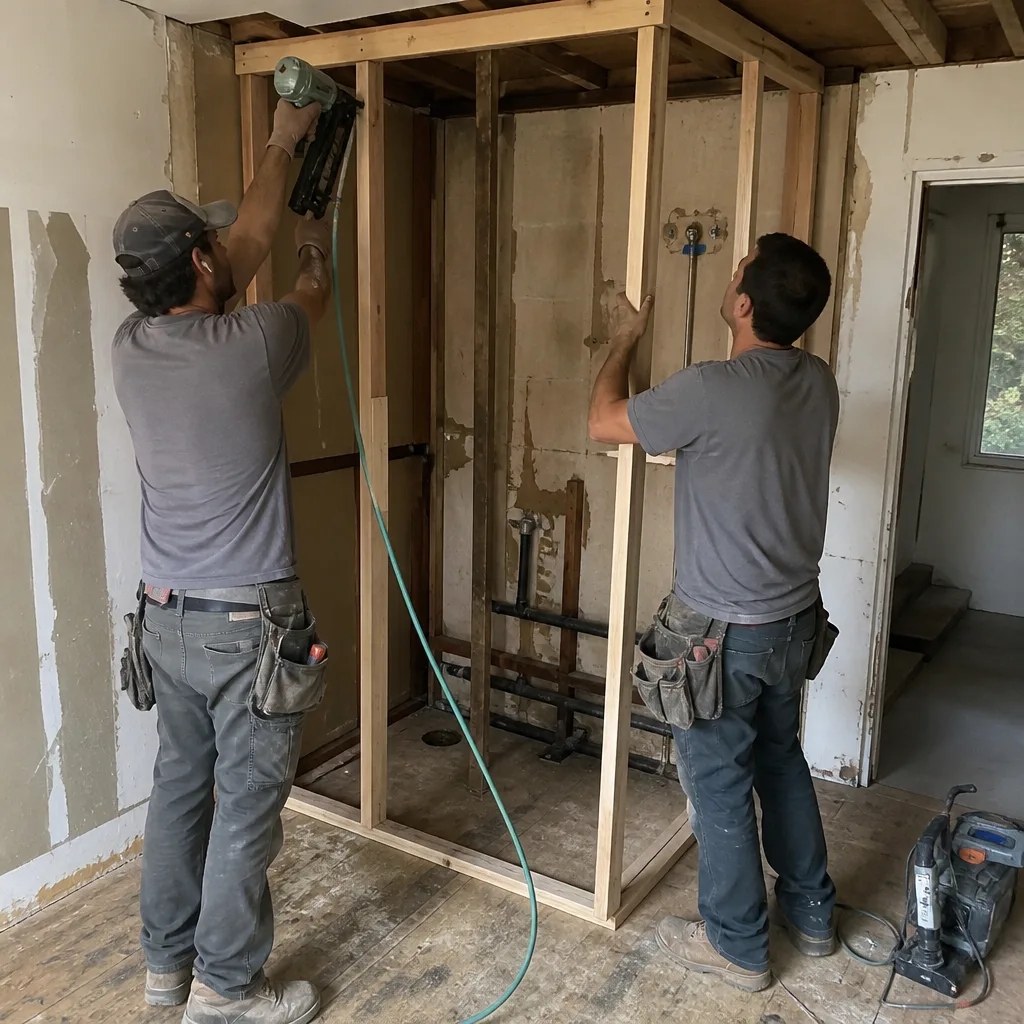
When a warning sign appears, the homeowner’s response sequence determines whether the issue resolves or escalates. Emotional confrontation, payment withholding without notice, or unilateral termination all weaken the homeowner’s legal position. The proper sequence is deliberate, documented, and protective.
Step 1: Written Communication to the Contractor
Document the specific concern in writing - email or certified mail, not text message. Reference the contract clause, the observed condition, and the requested remedy. “Per Section 4.2 of our contract, all change orders require written approval before work proceeds. On [date], your crew installed [item] without a signed change order. Please confirm whether this was an error and provide the signed change order, or remove the item and restore the prior condition at no cost.”
This letter creates a record, gives the contractor opportunity to cure, and establishes your reasonableness if dispute escalates.
Step 2: Request a Job-Site Meeting with Documentation
Schedule a meeting with the contractor’s principal or project manager, not just the crew lead. Bring the contract, the spec sheet, the photo record, and a written agenda. Record the meeting if California law permits (two-party consent state; obtain permission). Summarize understandings in a follow-up email: “Per our meeting of [date], we agreed that…”
Step 3: File a CSLB Complaint if Necessary
The Contractors State License Board accepts complaints at cslb.ca.gov. The complaint triggers investigation, potential disciplinary action, and access to the CSLB’s dispute resolution services. Filing does not require an attorney and does not preclude later litigation. The complaint itself becomes part of the contractor’s public record.
Grounds for complaint include: contracting without a license, misrepresentation, abandonment, violation of payment statutes, and failure to pay subcontractors (which can generate mechanics liens against the homeowner’s property even when the homeowner paid the prime contractor in full).
Step 4: Consult Construction Counsel Before Termination
Unilateral contract termination without proper notice can convert a contractor’s breach into the homeowner’s breach. Before terminating, consult an attorney specializing in construction law. The cost of a one-hour consultation is typically less than the cost of defending a wrongful termination claim.
Mechanics Lien Awareness in Santa Clara County
California mechanics lien law permits contractors, subcontractors, and material suppliers to record liens against improved property for unpaid work. The lien clouds title and must be cleared before sale or refinance. Critically, a homeowner who pays the prime contractor in full may still face liens from unpaid subcontractors or suppliers - the prime’s failure to pay downstream parties does not extinguish their lien rights.
Preliminary Notice Requirements
Subcontractors and suppliers must serve a Preliminary Notice within 20 days of first furnishing work or materials to preserve full lien rights. A homeowner who receives no preliminary notices cannot be certain who has lien rights and in what amounts. Request a list of all subcontractors and suppliers from your prime contractor, then verify whether you’ve received preliminary notices from each.
Stop Notice and Joint Check Protections
A Stop Notice directs the construction lender to withhold funds from the prime contractor. A joint check, payable to both prime and subcontractor, ensures the subcontractor receives payment directly. Both mechanisms protect the homeowner from double payment - paying the prime who then fails to pay the sub.
In Cupertino’s high-value market, where Rowan Construction Group Cupertino home projects often involve six-figure contract values, mechanics lien exposure is correspondingly significant. A $400,000 addition with $80,000 in subcontractor liens becomes a title problem that delays sale or requires bond posting to clear.
Common Mistakes to Avoid
- Paying cash or making checks payable to individuals rather than the licensed entity. Payments to “John Smith” instead of “Smith Construction, Inc.” may be treated as personal loans rather than contract payments, complicating dispute resolution and insurance coverage.
- Accepting “permit by owner” arrangements to save money. The homeowner who pulls their own permit becomes the “owner-builder” under California law, assuming liability for code compliance and worker injury that the contractor’s license and insurance would otherwise cover. In Cupertino, where hillside construction and seismic requirements add complexity, this is particularly risky.
- Verifying the license once but not checking renewal status. CSLB licenses expire every two years; a contractor licensed at bid time may be suspended at work time. Verify current status at cslb.ca.gov before every payment.
- Ignoring the “Notice of Completion” filing deadline. California’s mechanics lien filing period shortens from 90 days to 60 days after recorded Notice of Completion. Failing to record Notice of Completion extends the window during which liens can be filed against your property.
- Assuming a “bonded” contractor protects the homeowner. The contractor’s license bond is typically $25,000 and primarily protects employees for unpaid wages, not homeowners for defective work. A performance bond, which protects the homeowner, is a separate instrument rarely required for residential projects under $500,000.
- Waiting for problems to resolve themselves. The warning signs in this guide appear early for a reason: they are correctable at low cost when addressed, and expensive when ignored. A two-week delay in responding to a missing change order becomes a $10,000 dispute six months later.
When to Call a Professional
Call a construction attorney when: the contractor has abandoned the job with substantial incomplete work; you’ve received a mechanics lien notice or recorded lien; the contractor has filed bankruptcy; or the cost of defects exceeds $25,000 and the contractor disputes responsibility. For smaller disputes, the CSLB complaint process and small claims court (limit $12,500) may resolve the matter without attorney fees.
Before problems arise, call for a second opinion on any written estimate that concerns you. Rowan Construction Group Cupertino offers free estimates in Cupertino - call (669) 202-9618. Our Free Second Opinion on Any Written Estimate brings a competitor’s quote and we will review it line by line at no charge, identifying the line items, scope gaps, and contract language that predict trouble.
Frequently Asked Questions
California law caps down payments at 10% of the contract price or $1,000, whichever is less, with limited exceptions for fire/flood restoration or certain custom materials. A Cupertino contractor requesting more is violating Business and Professions Code §7159. Call (669) 202-9618 for a free estimate with our standard payment schedule - estimates are free.
A bid 30% below the field average typically signals underestimated scope, planned change order recovery, or financial distress driving the contractor to take work at unsustainable margin. In Cupertino’s market, where labor and material costs are among the highest in the nation, a 30% gap rarely reflects equivalent scope. Request a line-item breakdown and verify that permit fees, demolition, and subcontractor costs are fully included.
Yes. California mechanics lien law permits unpaid subcontractors and suppliers to lien the improved property regardless of payment to the prime contractor. Protect yourself by requesting preliminary notices from all subcontractors, considering joint checks for large payments, and recording Notice of Completion to shorten the lien filing period. Call (669) 202-9618 for an exact quote - estimates are free.
Stop work immediately and demand permit application before continuation. Unpermitted work in Cupertino must be disclosed on sale, may trigger code enforcement, and voids homeowner’s insurance coverage for related damage. The contractor who begins without a permit has violated contract and law; document the demand in writing and consult counsel if work continues.
Search cslb.ca.gov using the contractor’s license number. Verify: license status is “Active,” bond is current, workers’ compensation insurance is on file (or valid exemption), and no disciplinary actions appear. Check renewal date - licenses expire every two years. Do not rely on the contractor’s representation; verify independently before signing and before each progress payment.
You should receive: final lien releases from all subcontractors and suppliers; a final inspection approval from Cupertino’s building department; manufacturer warranty registrations for all warranted materials; and a written warranty from the contractor for workmanship. Under The Haven Standard, our customers also receive the complete documented photo record from every site visit, compiled as a permanent project file. Call (669) 202-9618 for an exact quote - estimates are free.
The Bottom Line
The warning signs of contractor failure and project dispute are present early, in documents and behaviors that a prepared homeowner can recognize and respond to. The 10% payment rule, the line-item bid, the signed change order, and the documented photo record are not bureaucratic formalities - they are the structural elements that keep projects within budget and on scope. A Cupertino homeowner who demands specificity in bidding, insists on written documentation for every change, and responds to warning signs with deliberate written communication protects both their property and their legal position. The cost of prevention is always lower than the cost of dispute resolution.
Written by Grant Rowan, Owner at Rowan Construction Group Cupertino, serving Cupertino since 2007.