

Free written scope consultation - allowances, timeline, and change-order rules on paper before a single trade is scheduled




 Before
 After
After Before
 After
After Before
 After
AfterHow Much Does a Tub-to-Shower Conversion Cost in Cupertino?
A tub-to-shower conversion in Cupertino, CA typically costs between $3,500 and $10,000, with most homeowners landing in the $5,000-$7,500 range for a mid-grade shower with tile walls, a prefabricated base, and updated fixtures. The spread is wide because the work can be as simple as swapping the fixture and dropping in a shower pan, or as involved as waterproofing a full tile enclosure with a linear drain and Kohler controls. Under the Haven Standard, Rowan Construction Group puts the flat written price in front of you before any work starts – every time, no exceptions.
Tub-to-Shower Conversion Cost Breakdown (2026)
These are the actual line items Cupertino homeowners see on a written Rowan quote. Numbers reflect local labor rates, permit costs, and material sourcing in Santa Clara County as of 2026.
| Line Item | Typical Range | Notes |
|---|---|---|
| Demo and tub removal | $300-$700 | Cast-iron tubs add labor and disposal cost; alcove installs are easier to demo than freestanding |
| Subfloor inspection and repair | $200-$900 | Older Cupertino homes (especially 1960s-1970s Eichler-adjacent builds in Rancho Rinconada) often have moisture damage at the subfloor that isn’t visible until demo |
| Shower pan / base | $350-$1,800 | Prefab acrylic bases are the lower end; custom-tiled mortar beds run higher and require a waterproofing membrane like Schluter Kerdi |
| Waterproofing membrane | $200-$600 | Non-negotiable on a tiled shower; Schluter Kerdi or Wedi board are the two systems we spec most often in Cupertino’s wetter microclimates (Monta Vista, Linda Vista area) |
| Tile – walls and floor | $700-$3,500 | Porcelain field tile is the baseline; large-format slabs or natural stone push toward the top of the range |
| Shower door or enclosure | $400-$2,200 | Frameless glass runs highest; a simple curtain rod is lowest but rarely what Cupertino buyers are asking for |
| Plumbing rough-in adjustments | $300-$1,200 | Moving a drain location or adding a separate hand spray always requires a permit in Cupertino (City of Cupertino Building Department, permit fee typically $200-$450 depending on valuation) |
| Fixtures – valve, showerhead, controls | $250-$1,500 | Kohler Bancroft or Toto Soiree are mid-grade standards; thermostatic systems are the top end |
| Drywall, cement board, finishing | $200-$600 | HardieBacker or equivalent cement board replaces standard drywall in the wet zone – not optional |
| Permit fees (City of Cupertino) | $200-$450 | Required any time plumbing lines are altered; Rowan pulls permits and manages inspections as part of the scope |
| Total Typical Range | $3,500-$10,000 | Most mid-grade Cupertino conversions come in at $5,000-$7,500 with a tiled enclosure and new Kohler fixtures |
The biggest cost drivers between the low end and the high end are tile selection and plumbing relocation. A homeowner who keeps the drain in its current location, chooses a prefab acrylic base, and goes with porcelain tile in the $4-$6 per square foot range can stay comfortably at $4,000-$5,500. A homeowner who wants a custom mortar bed, large-format porcelain slabs at $12-$18 per square foot, a frameless glass door, and a thermostatic Kohler system will push toward or past $9,000. Neither choice is wrong – the difference is what the written quote captures before anyone touches a wall.
One number Cupertino homeowners are sometimes surprised by: disposal fees. Santa Clara County transfer station fees for a cast-iron tub removal can add $150-$300 to the disposal line that a rough verbal estimate doesn’t mention. Rowan’s written price includes disposal, so there’s no invoice surprise after demo day.
What Affects Tub-to-Shower Conversion Pricing in Cupertino
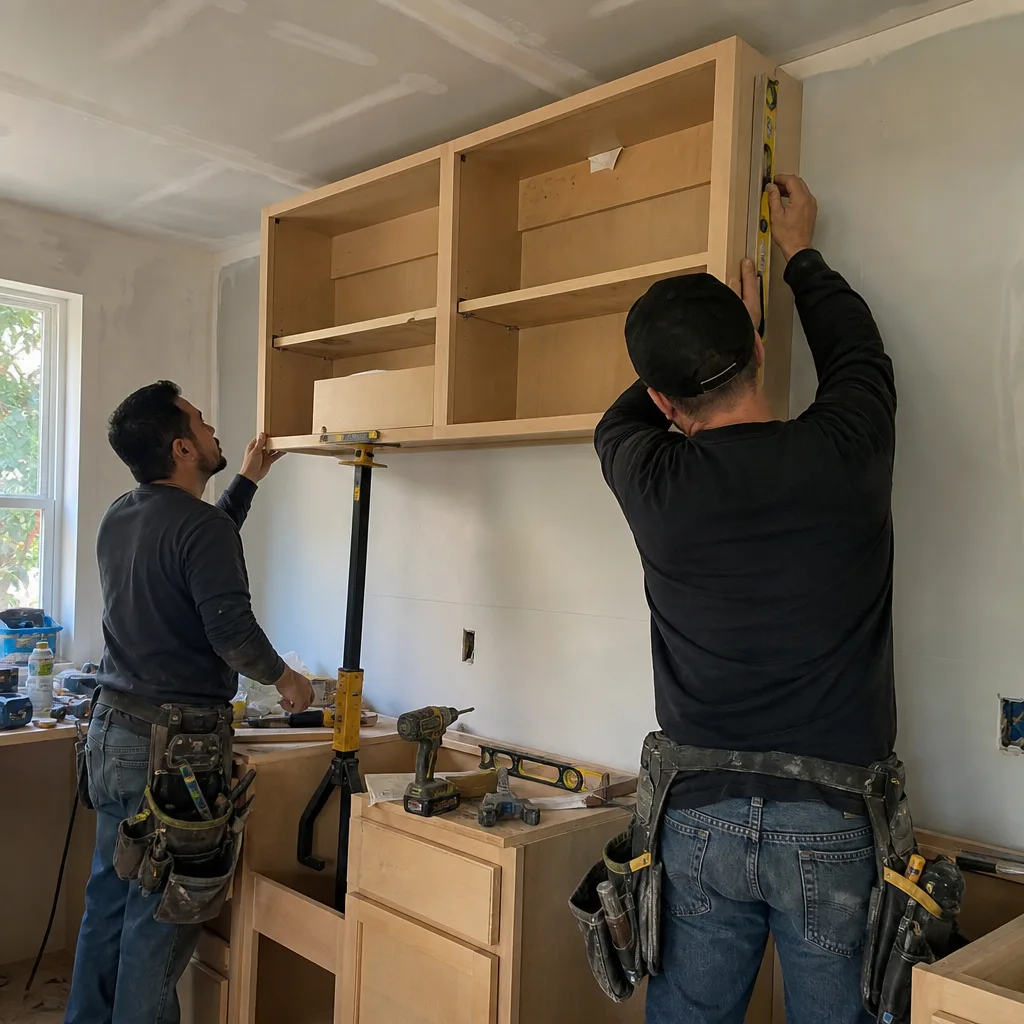
Six variables move the needle most in the Cupertino market. Understanding them before you get quotes helps you compare bids on equal terms.
- Plumbing relocation: If the new shower drain sits where the tub drain was, plumbing costs stay modest. Moving it even 12 inches means opening the subfloor, rerouting the P-trap, and pulling a plumbing permit from the City of Cupertino Building Department – typically adding $400-$900 to the project.
- Tile and material grade: This single variable accounts for more budget variance than anything else. Standard porcelain tile costs $3-$8 per square foot installed; natural stone like Calacatta marble or travertine runs $15-$30 per square foot installed with additional sealing requirements. The shower in a master bath that was “going to be quick” often stalls here when homeowners realize the difference between catalog tile and the slab they saw in a showroom.
- Subfloor condition: Cupertino’s housing stock is heavily weighted toward 1960s and 1970s tract builds, particularly in the Homestead and Monta Vista neighborhoods. Forty-plus years of tub surround leaks and humid Silicon Valley winters mean subfloor rot is more common than rare. Rowan documents what the crew finds with a photo record at demo – including moisture meter readings at the subfloor – so the homeowner sees the condition before repair pricing is agreed, and no change proceeds without a signed change order.
- Shower enclosure type: A tension rod with a curtain is $50. A framed sliding door is $400-$800 installed. A frameless hinged panel in 3/8-inch tempered glass is $1,200-$2,200 installed. The enclosure choice affects both budget and resale perception, and in Cupertino’s competitive real estate market, frameless glass has become a standard expectation at the mid-grade price point.
- Electrical work – ventilation and lighting: California Title 24 requires adequate ventilation in a bathroom without an operable window. Converting a tub-shower combination to a walk-in shower sometimes means upgrading a bath fan that was marginal for the old layout. GFCI updates and recessed shower lighting add $200-$600 to the electrical scope. Cupertino’s building inspectors enforce Title 24 at inspection, so this is a cost to budget, not a cost to avoid.
- Accessibility features: Walk-in showers built to ADA or aging-in-place standards – a zero-threshold entry, a fold-down teak bench, grab bar blocking in the walls, or a handheld showerhead on a slide bar – add $300-$1,200 depending on how many features are included. Cupertino’s older homeowner population, particularly in the Rancho Rinconada and Seven Springs areas, is requesting these features more frequently, and building grab bar blocking into a new shower costs far less than retrofitting one into a tiled wall later.
 Before
 After
AfterCupertino-Specific Considerations
A few local factors don’t show up in generic national pricing guides but matter here.
Permit requirements: The City of Cupertino requires a plumbing permit any time supply or drain lines are altered. For a basic conversion where the drain stays in place and only the fixture is swapped, a permit may not be required – but the moment you move a drain or add a second showerhead, it is. Rowan pulls permits as part of the written scope and coordinates the inspection schedule, so the homeowner isn’t tracking that separately.
Water quality: Cupertino is served by California Water Service and receives water from the Hetch Hetchy reservoir system, which carries moderate mineral content. Hard water leaves calcium deposits on tile grout and glass enclosures faster than most homeowners expect. Specifying a slightly larger grout joint (3/16 inch rather than 1/16 inch) with a high-density epoxy grout, or choosing large-format tile with fewer grout lines, reduces long-term maintenance. This is the kind of recommendation that ends up in a Rowan written scope rather than a verbal suggestion you might forget.
Climate and moisture: Cupertino sits in a microclimate that gets measurably more fog and moisture than downtown San Jose, particularly in the neighborhoods below the foothills – Linda Vista, Monta Vista, the Rancho neighborhoods. That ambient humidity means waterproofing decisions matter more here than they might in a drier inland market. A Schluter Kerdi membrane or Wedi board installation behind tile adds $200-$400 to the cost and removes most of the risk of a leak callback years later.
Resale context: Cupertino’s median home sale price sits well above the Bay Area average, driven largely by the school district premium and tech-sector buyers. A Tub-to-Shower Conversion in Cupertino done at the mid-to-upper range of the cost spectrum – tiled enclosure, frameless glass, quality fixtures – tends to read as a move-in-ready upgrade rather than a cosmetic refresh, which matters in a market where buyers discount homes that look like they need work.
How to Save on a Tub-to-Shower Conversion in Cupertino
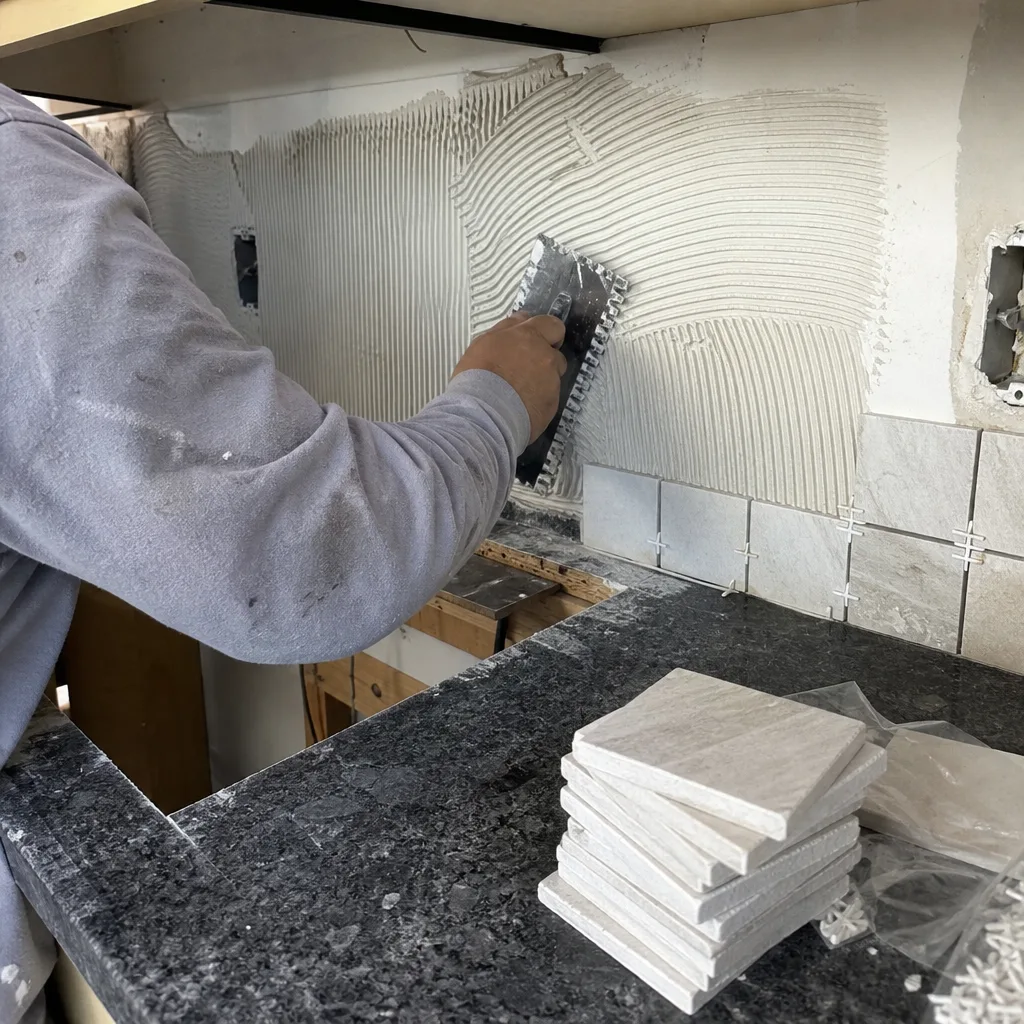
There are real ways to bring a conversion in at the lower end of the $3,500-$10,000 range without cutting corners on what matters structurally.
- Keep the drain where it is. This is the single biggest lever on cost. Moving a drain means plumbing labor, subfloor work, and a permit. If the new shower layout works with the existing drain location, you save $400-$900 immediately.
- Choose a prefab acrylic or solid-surface base. A custom mortar bed with tile adds significant labor. A quality prefab base from a brand like Kohler or American Standard is watertight, durable, and installs in a fraction of the time. If you’re more interested in function than a fully tiled floor, this is money well placed.
- Select porcelain tile in the $4-$8 per square foot range. The Cupertino tile showrooms carry material that photographs like marble at a fraction of the price. Large-format rectified porcelain at $6 per square foot, properly installed with a Schluter edge profile, looks considerably more expensive than it costs. Save the natural stone budget for a smaller feature niche rather than the full enclosure.
- Get the written quote before deciding on glass. A semi-frameless slider at $600-$900 installed is a meaningful step up from a curtain rod without the full frameless-glass premium. If the budget is running tight elsewhere, this is a reasonable place to land.
- Bring competing quotes to Rowan for a free second opinion. If you have a written estimate from another contractor, Rowan’s Free Second Opinion offer covers a line-by-line review at no charge. It’s a useful way to understand whether a lower bid is lower because of material grade, missing scope items, or genuine efficiency.
For an exact written price on your specific bathroom, call (669) 202-9618. Rowan doesn’t do ballpark-over-the-phone – the estimate is written, with line items, before anyone picks up a tool. That’s Clause 1 of the Haven Standard, and it’s been that way since 2007.
How Does a Tub-to-Shower Conversion Work?
Understanding the process helps you evaluate any quote you receive and know what the crew should be doing on each day of the project.
Day 1 – Demo and inspection: The tub, surround, and any tile are removed. The subfloor is exposed and inspected for moisture damage. Rowan’s crew photographs the subfloor condition with a documented photo record before any repair work is quoted or started – so the homeowner sees what was found, not a verbal description of it. If subfloor repair is needed, it goes on a signed change order before the repair begins.
Day 1-2 – Rough plumbing: If the drain is staying in place, this is minimal – cleaning up the existing drain fitting, verifying the P-trap, and roughing in the valve location for the new fixture. If the drain is moving, this is where the subfloor is opened and the permit inspection is scheduled.
Day 2 – Waterproofing and backer: Cement board (HardieBacker or similar) goes up in the wet zone in place of standard drywall. A waterproofing membrane – Schluter Kerdi is the system Rowan specs most often – is applied to the walls and floor before any tile is set. This step is not visible in the finished product, which is partly why it gets skipped by contractors who are pricing below market. A failed membrane shows up as a water stain on the ceiling below two or three years later.
Day 3-4 – Tile setting: Floor tile goes down first, then wall tile. Large-format tile requires a flatter substrate and more precise layout to avoid lippage (the industry term for edges that don’t sit flush). Grout is typically applied on day 4 or after a 24-hour set time depending on the adhesive used.
Day 4-5 – Fixtures, door, and final inspection: The shower valve and showerhead are installed and pressure-tested. The glass enclosure or door is set. The permit inspection, if applicable, happens here. The finished project is documented with a photo record, which the homeowner receives as a standard deliverable.
Repair vs. Full Conversion – When It Makes Sense to Convert
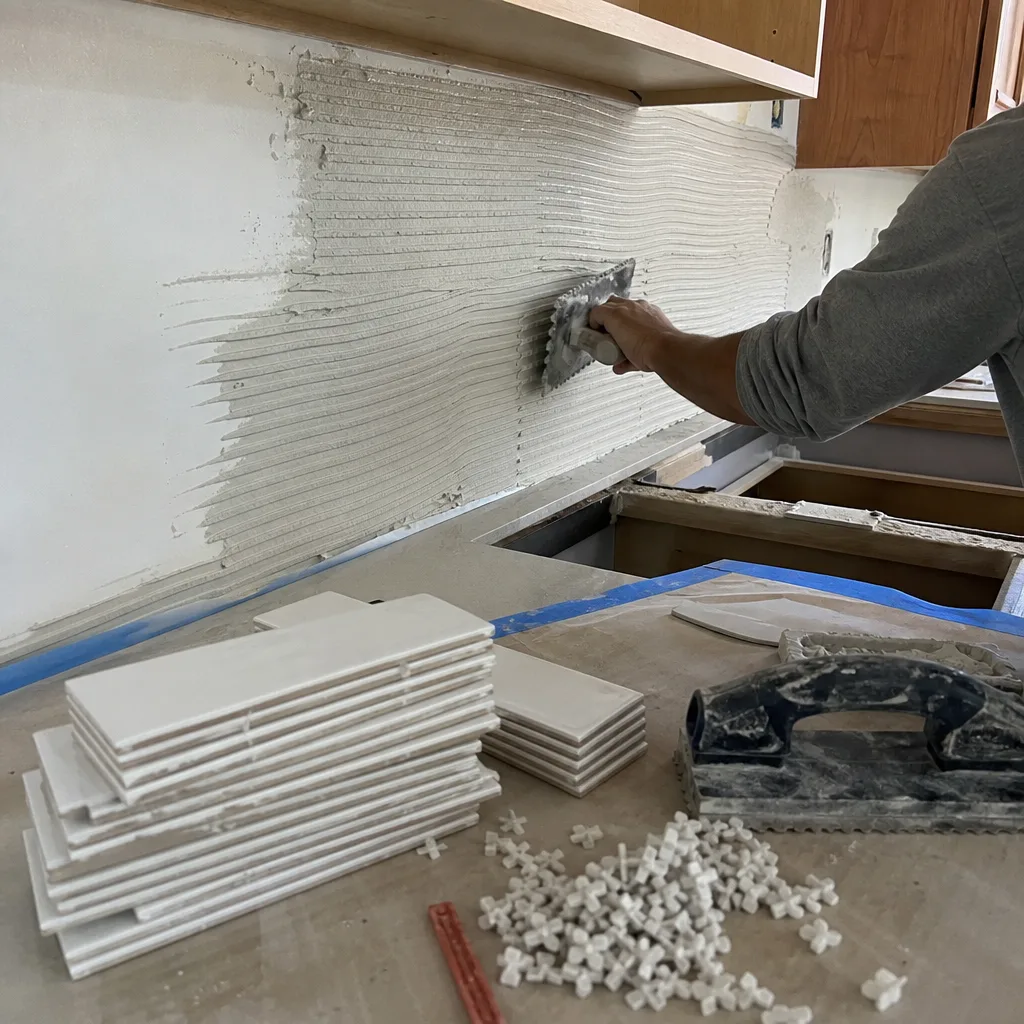
Not every aging tub situation calls for a full conversion, but there are clear signals that removal makes more financial sense than repair.
If the tub surround tile is cracking at the grout lines and there’s any softness in the wall behind it, you’re looking at a failing waterproof layer – regrouting the surface without addressing the membrane underneath is a temporary fix that typically fails within 18 months. At that point, the labor cost of opening the wall is unavoidable. A full conversion during that same window costs $1,500-$2,500 more than a patch repair but gives you a new waterproofed enclosure with a 365-day guarantee rather than a temporary one with a question mark.
If the tub itself hasn’t been used in more than a year – a pattern we see frequently in Cupertino’s older two-bath homes where one bath becomes the household’s primary shower – converting the unused tub to a walk-in shower gives the space functional value instead of storage space that’s awkward to clean. The additional square footage that a walk-in shower occupies relative to a tub is negligible in a standard alcove layout, but the perception of space is meaningfully better with a glass enclosure than with a tub surround.
If the primary motivation is aging in place, conversion to a zero-threshold shower with a fold-down bench and grab bar blocking is the right call and is almost always more cost-effective done during a planned conversion than retrofitted into an existing tiled enclosure. Blocking the walls now for future grab bars costs roughly $100 in materials and labor; cutting into a tiled wall later to add blocking costs $400-$800 and leaves a visible repair line unless the tile is patched with matching material, which is rarely available.
Comparing a Tub-to-Shower Conversion to Related Projects
It helps to know where a conversion sits relative to other bathroom work in Cupertino.
- A full bathroom remodel in Cupertino runs $9,000-$28,000 and includes the vanity, toilet, flooring, and lighting in addition to the shower work.
- A walk-in shower installation in a space that doesn’t currently have a shower starts at $4,500 and goes to $12,000 – comparable to a conversion but often requires more plumbing rough-in work because there’s no existing supply or drain to build from.
- A shower replacement (swapping one shower for another without removing a tub) runs $3,000-$8,500 and is the closest equivalent in scope.
- A bathroom vanity installation alone runs $800-$3,000 and is often combined with a shower conversion in a single project visit to share the permit and mobilization cost.
If the bathroom needs both a vanity update and a tub conversion, doing them in the same project scope typically saves $400-$800 in mobilization and permit costs versus two separate projects.
Why Cupertino Homeowners Work With Rowan Construction Group
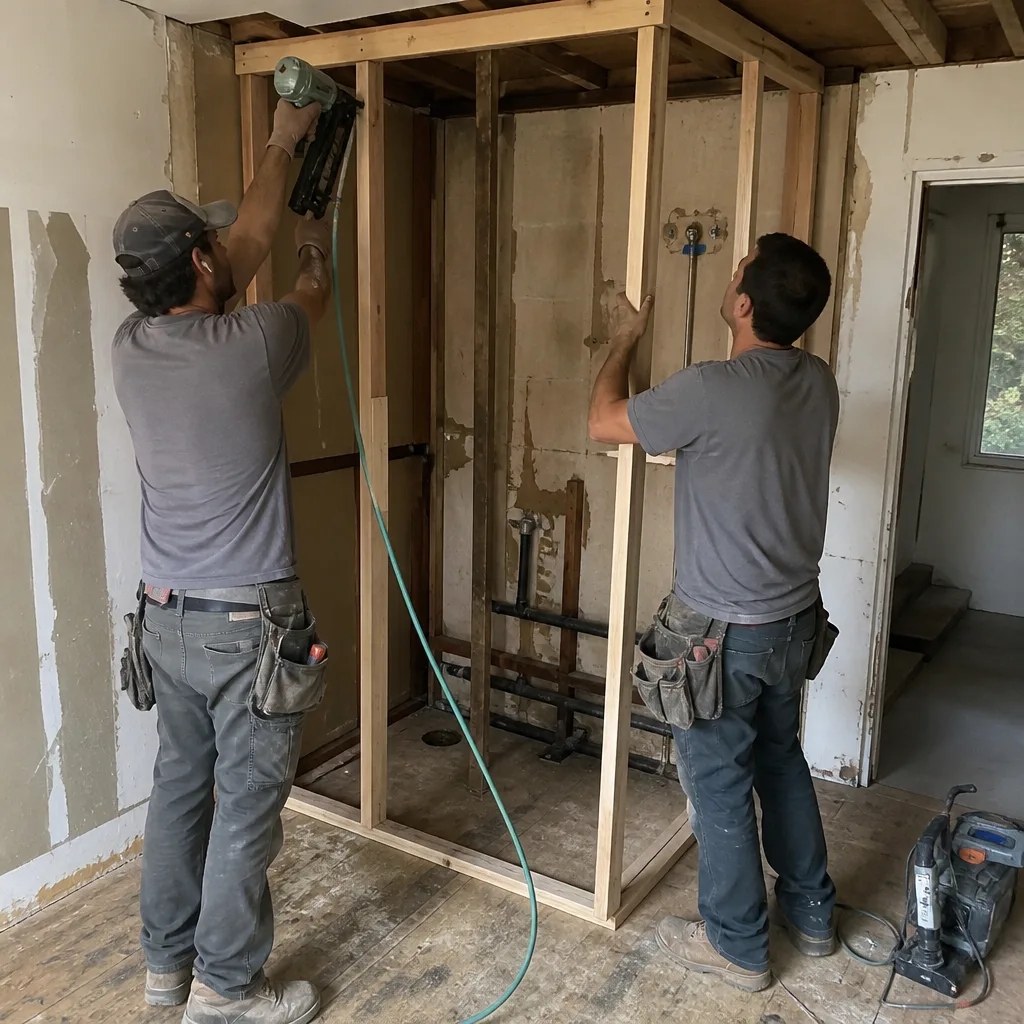
Since 2007, Rowan Construction Group has delivered more than 4,000 projects with a written price before any work started on every single one. That discipline – the flat written price, the signed change order before any scope change, the documented photo record on every visit – comes from the Haven Standard that defines how every Rowan project runs.
Grant Rowan built the company on one operating principle: the number the customer agreed to should be the number on the final invoice, within a few percent, with a paper trail that shows every deviation. Over 4,000 projects, that principle has held. It’s not a marketing line – it’s what the documented record shows.
The 365-Day Done Right Promise means that if something isn’t right after the crew leaves, Rowan makes it right. That’s in writing on every project, not an asterisk in a footer.
For tub-to-shower conversions specifically, the variables that cause budget surprises – subfloor condition at demo, permit requirements for drain relocation, tile grade decisions – are exactly the variables that a written scope and a photo-documented demo process are designed to manage. A homeowner who has seen the subfloor condition in photographs before signing a change order is a homeowner who understands why the repair line is on the invoice.
FAQs – Tub-to-Shower Conversion Cost in Cupertino
How much does a tub-to-shower conversion cost in Cupertino?
A tub-to-shower conversion in Cupertino costs $3,500-$10,000, with most mid-grade projects – tiled enclosure, prefab or tiled base, Kohler fixtures, and a frameless or semi-frameless glass door – landing at $5,000-$7,500. The lower end applies to a simple alcove conversion with an acrylic base and standard porcelain tile; the upper end applies to a custom mortar bed, large-format stone tile, and a full frameless glass enclosure. Call (669) 202-9618 for a written price specific to your bathroom.
Do I need a permit for a tub-to-shower conversion in Cupertino?
If the drain stays in its current location and no supply lines are moved, a permit may not be required for a basic conversion. Any time plumbing lines are altered – moving the drain, adding a second showerhead, or relocating supply rough-in – the City of Cupertino Building Department requires a plumbing permit, which typically costs $200-$450 depending on project valuation. Rowan pulls and manages permits as part of the written project scope.
How long does a tub-to-shower conversion take in Cupertino?
A straightforward conversion with a prefab base and tile walls takes 3-5 days. A custom mortar bed with large-format tile, a frameless glass door, and any plumbing relocation extends the timeline to 5-7 days. Permit inspections add scheduling time but don’t typically extend the active work days. The written project scope Rowan delivers before work starts includes a day-count estimate, not a vague “approximately one week.”
Is it worth converting a tub to a shower in Cupertino?
In Cupertino’s real estate market, a tub-to-shower conversion in the primary bathroom can actually reduce resale appeal slightly, because buyers with families prefer to keep one tub in the home. In a secondary bath that hasn’t been used as a tub in years, conversion to a walk-in shower is consistently perceived as an upgrade by buyers – particularly with a tiled enclosure and frameless glass. If your home has at least one remaining tub, converting the second is generally a sound investment at the $5,000-$7,500 range.
Can Rowan match a lower quote I already have?
Rowan offers a Free Second Opinion on any written estimate – bring the competing quote and Grant Rowan’s team will review it line by line at no charge, identifying what’s included, what’s missing, and where the numbers differ. That review costs nothing and usually clarifies whether a lower number reflects a genuine efficiency or a shorter scope. Call (669) 202-9618 to schedule it.
What’s included in Rowan’s tub-to-shower conversion price?
The written flat price includes demo and disposal of the existing tub, subfloor inspection and documented photo record at demo, waterproofing membrane, backer board, tile setting (labor), fixture installation, shower door installation, permit fees, and the post-project photo record. Material costs for tile and fixtures are specified by grade in the written scope – not estimated as a range – so the number you agree to reflects the actual materials being installed. Under Clause 1 of the Haven Standard, no work begins without that written price in hand.
Get a Written Price for Your Cupertino Tub-to-Shower Conversion
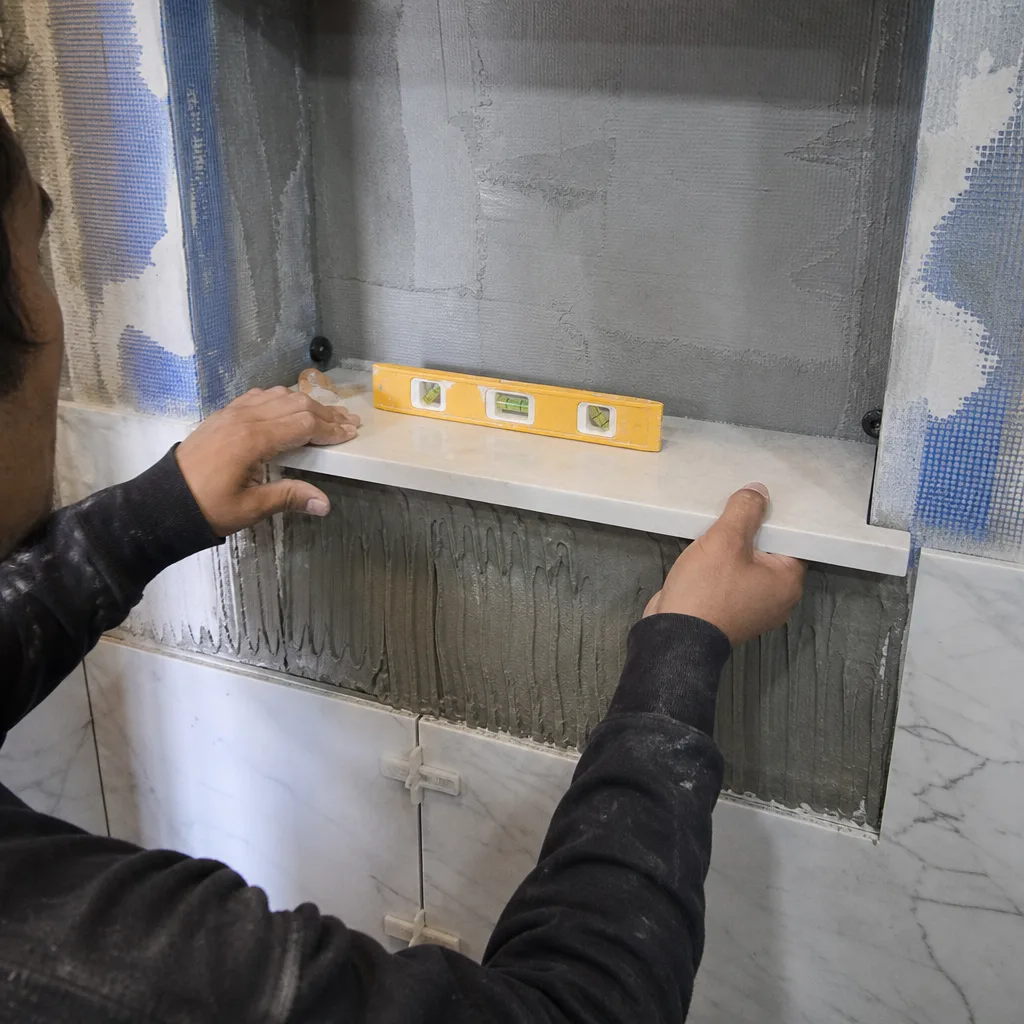
Rowan Construction Group provides flat written estimates – with line items, material specifications, and a project timeline – before any work starts on any project. For a home improvement project as specific as a tub-to-shower conversion, a number on the page is a starting point; a written price from a contractor who has seen your bathroom is what you can actually budget against.
Grant Rowan and the Rowan team serve Cupertino and the surrounding Santa Clara County communities. Call (669) 202-9618 to schedule a free estimate. The estimate is written, itemized, and delivered before anyone picks up a tool – because that’s been the rule since 2007, and it’s not going to change.
Pricing reflects the Cupertino market as of 2026. Rowan Construction Group Cupertino offers free estimates – call (669) 202-9618.
Written by Grant Rowan, Owner at Rowan Construction Group, serving Cupertino since 2007.
What Our Customers Say
"Final invoice was within two percent of the contract. Every change was priced and signed before anyone picked up a tool."
- Malcolm T."Talked us out of the larger scope we came in asking for, because it would not have added the value we thought."
- Emil R."Solid work, decent crew, and the site was left tidy every evening."
- Pearl A.